
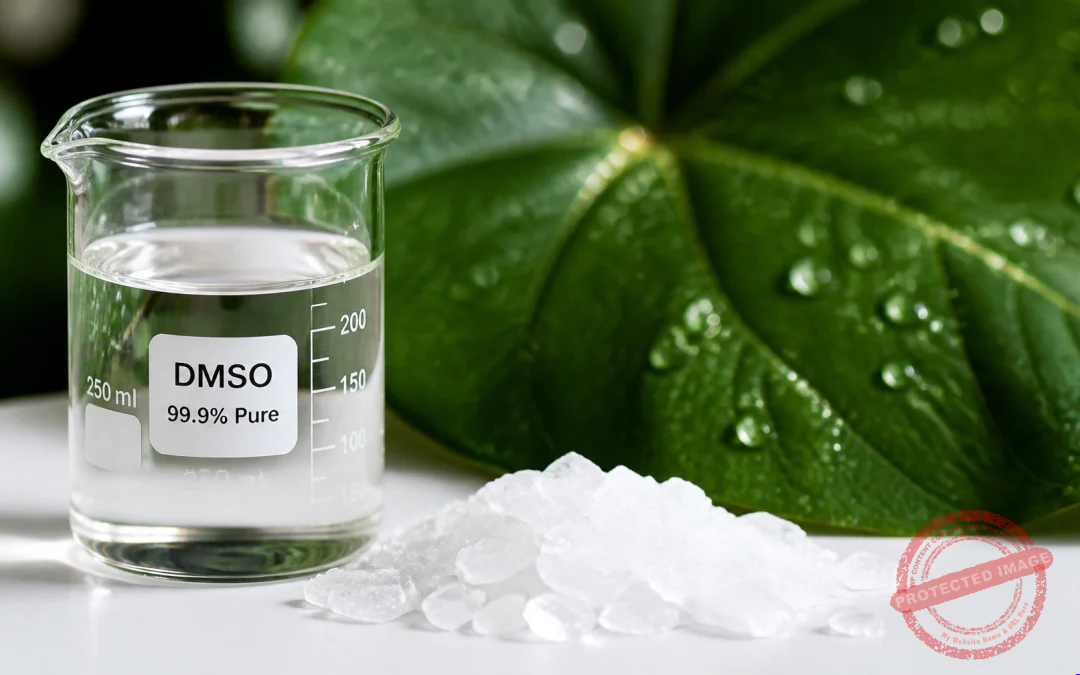
The efficiency of topical applications is often limited by the body’s most robust biological shield: the skin. Specifically, the stratum corneum: the outermost layer of the epidermis: acts as a highly effective barrier against the permeation of external substances, particularly ionic minerals like magnesium. However, emerging research into chemical penetration enhancers has identified Dimethyl Sulfoxide (DMSO) as a pivotal organic solvent for facilitating the movement of solutes across this lipid-rich barrier.
In this 2026 update, we examine the technical synergy between high-purity DMSO and transdermal magnesium chloride, focusing on recent pilot studies that highlight a significant increase in systemic bioavailability when these two compounds are utilized in tandem.
The Challenge of Transdermal Permeation
For magnesium to be absorbed through the skin, it must navigate the "brick and mortar" structure of the stratum corneum. The "bricks" are corneocytes (dead skin cells), while the "mortar" consists of a dense matrix of ceramides, cholesterol, and fatty acids. Because magnesium ions (Mg²⁺) are hydrophilic (water-loving) and the skin barrier is lipophilic (fat-loving), the rate of passive diffusion is traditionally low.
Standard transdermal applications, such as magnesium sprays or flakes, often result in localized skin saturation with limited systemic rise in plasma levels. This is where the role of an analytical reagent like DMSO becomes essential in a laboratory or experimental context.
2023 Pilot Study: A Comparative Analysis
Recent experimental data from a 2023 pilot trial has provided new insights into the quantitative benefits of adding DMSO to magnesium formulations. The study involved 40 participants divided into two groups over a 14-day period.
- Group A: Applied a standard 20% Magnesium Chloride (MgCl₂) gel.
- Group B: Applied a 20% MgCl₂ solution enhanced with a 5% DMSO concentration.
The results demonstrated a stark contrast in systemic absorption. Group A showed a modest 4.8% (±1.7%) increase in plasma magnesium levels. In contrast, Group B: the DMSO-enhanced group: recorded a 12.4% (±2.1%) increase. This suggests that the addition of DMSO may enhance topical magnesium penetration by a factor of 2 to 3 times compared to non-solvent formulations.

Mechanism of Action: How DMSO Facilitates Absorption
As an organic solvent and excipient, DMSO functions by temporarily and reversibly altering the physical structure of the skin’s lipid bilayers. When applied, DMSO molecules displace water molecules associated with the polar head groups of the lipid matrix. This "shuffling" of the lipid structure creates microscopic aqueous channels, allowing the magnesium ions to pass through the stratum corneum more readily.
Furthermore, DMSO acts as a carrier, dragging the dissolved solute along with it as it penetrates the deeper layers of the dermis. This property makes it an invaluable analytical reagent for researchers looking to maximize the efficacy of topical mineral delivery systems.
Identifying Pharmaceutical-Grade Purity
When sourcing DMSO for experimental or laboratory use, the degree of purity is the most critical variable. At DMSO.co.za, we supply 99.9% pure Dimethyl Sulfoxide derived from wood pulp (Lignin). This organic origin ensures a solvent free from the petroleum-based contaminants often found in industrial grades.
The 18.5°C Crystallization Test
A definitive method for verifying the 99.9% purity of DMSO is its freezing point. Pure DMSO has a relatively high freezing point of 18.5°C (65.3°F). If your DMSO remains liquid at 15°C, it likely contains significant impurities or water dilution. High-grade DMSO will crystallize into ice-like structures in a standard refrigerator or even on a cool spring morning in South Africa.

Selecting the Right Magnesium Source
For optimal results in transdermal research, the quality of the magnesium is just as vital as the solvent. Our Magnesium Chloride 800g is sourced from the Dead Sea, providing a high-concentration mineral profile. For those requiring a pre-dissolved solution, our 2 Litre Magnesium Oil offers a saturated brine that is ready for experimental formulation.
Recommended Storage and Handling
Because DMSO is a powerful solvent, it must be handled with scientific rigor:
- Container Compatibility: DMSO should only be stored in HDPE (High-Density Polyethylene) or borosilicate glass containers. It will dissolve many standard plastics and leach toxins into the solution.
- Skin Preparation: The area of application must be thoroughly cleaned. Because DMSO is a universal carrier, it will transport any surface contaminants (soaps, lotions, or perfumes) directly into the bloodstream.
- Protective Gear: When mixing high-concentration solvents, the use of Blue Nitrile Gloves is recommended to prevent unintended absorption.
Practical Application in a Laboratory Context
Researchers often utilize a 50ml Glass Roll-on Bottle for precise, localized application of magnesium-DMSO blends. A common experimental ratio involves a solution of 70-90% Magnesium Oil combined with 10-30% 99.9% Pure DMSO.

By combining these two high-purity compounds, users can leverage the solvent properties of DMSO to bypass the limitations of the skin barrier, ensuring that the magnesium reaches the underlying tissues where it is required for biochemical processes.
Research Disclaimer
This research is for informational purposes only and describes experimental or specialized applications. It does not refer to the intended use of the product sold on this site.
SAHPRA Disclaimer
This product is supplied by DMSO.co.za as a high-purity (99.9%) organic solvent and analytical reagent only. This product has not been evaluated by the South African Health Products Regulatory Authority (SAHPRA) for medicinal use and is not intended to diagnose, treat, cure, or prevent any disease.
Scientific Citations & References
- VitaminDWiki Literature Summary (2023). Pilot Trial: DMSO as a Penetration Enhancer for Topical Magnesium Chloride. Access Source
- Kass, L. S., et al. (2017). Effect of transdermal magnesium cream on serum and urinary magnesium levels in humans: A pilot study. PLoS ONE 12(4): e0174885. DOI: 10.1371/journal.pone.0174885
- Gröber, U., et al. (2017). Myth or Reality: Transdermal Magnesium? Nutrients, 9(8), 813. DOI: 10.3390/nu9080813
- Capriotti, K., & Capriotti, J. A. (2012). Dimethyl Sulfoxide (DMSO): A History and Revitalization. Journal of Clinical and Aesthetic Dermatology. PMC3460663
- Marwah, H., et al. (2016). Permeation enhancer strategies in transdermal drug delivery. Drug Design, Development and Therapy. DOI: 10.2147/DDDT.S107501